SAVIR is the hub for injury and violence research. As such, we are working to connect our members with each other and those who make decisions regarding investment in IVP research funding and evidence-based approaches to solutions of injury and violence outcomes.
We find that direct, sustained, and local attention to the critical issues you address helps the community and lawmakers to understand the value of IVP research. We identified a few steps you can take to bring attention to your lifesaving and critically impactful work. We are going to work to keep this site updated as we receive any information or resources that may be a benefit to you in your endeavors. Please know that we at SAVIR are working hard to connect with lawmakers and colleagues to make our collective voice heard and elevate the field.
Timeline & Action Items:
We are finding that many lawmakers and the community do not know our work. We have the power to inform them about the lives we save, the jobs we create, and how important this issue is to society. We also found that the best action is local action, and recommend the following activities:
- Call your Congressperson and Senators. If they are supportive of IVP and your work, thank them for their support. If they are not, tell them why your work matters in their district, to their constituents.
- Visit your Congressperson or Senators in their home district. Set up an appointment to meet with their staffers in your state.
- Arrange site visits. Invite your lawmaker or their staff to a site visit and show them what you do.
- Write op eds and letters to the editor. Write a letter to the editor or an op ed for your local news outlet.
- Press conference. You can reach out to the press and host a press conference.
- State & local lawmakers. You can do steps 1 through 3 with your state and local lawmakers. They are working hard to understand the issues and how their constituents will be impacted. They can help elevate your work.
Raise Your Voice for Public Health
The Department of Education’s newly proposed definition of “professional degrees” under the One Big Beautiful Bill Act (OBBBA) excludes public health degrees such as the MPH and DrPH, as well as several other health professions degrees. This change could restrict access to critical federal loan support, posing significant consequences for students, academic institutions, and the nation’s public health workforce.
The Association of Schools and Programs of Public Health has advocacy resources and a social media toolkit to help you take action.
Relevant Resources:
- Find contact info for your elected officials
- View the CDC Congressional Justification and FY24 State Fact Sheets CDC’s National Center for Injury Prevention and Control Supports: All 50 States: FY 2024 and the AHA Congressional Justification.
- SAVIR is a member of the Keep America Safe Coalition, led by Safe State Alliance. They have an amazing resource center with sample language and tips.
- Tips for writing Op Eds from the Op Ed Project. Example Op Ed by Sharon Gilmartin The Hill.
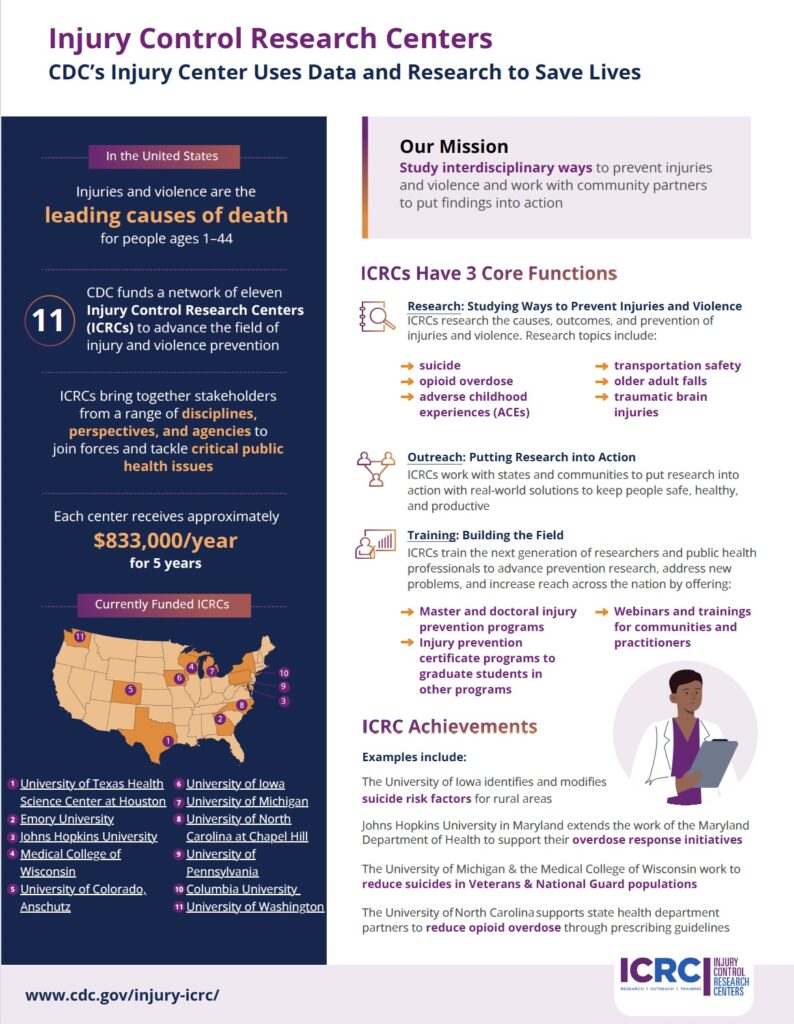
- ICRC One Pager
Key points to share:
- ICRCs develop policies and programs to reduce injury and violence at the local, state, and federal levels; provide technical assistance to local and state health departments with implementation of model programs that are responsive to communities’ needs; and evaluate injury and violence prevention programs across the country.
- They are uniquely positioned to collaborate with law enforcement, community partner organizations, local and state health departments, and others to foster the design and implementation of targeted, evidence-based injury and violence prevention programs.
- They focus on the most pressing injury and violence prevention needs within their communities and have demonstrated a proven impact across the injury and violence prevention arena.
- Maintaining these Centers is critical for addressing pressing IVP issues across urban, rural, and suburban communities supporting all constituencies.