Call for Applications: Charles E. Scheidt Faculty Fellows in Atrocity Prevention
Your Discipline Has a Role in Preventing Genocide. Here’s How to Find It.
What does nursing have to do with genocide prevention? Or data science? Or theater?
More than you might think.
That’s the premise behind the Charles E. Scheidt Faculty Fellows in Atrocity Prevention program at Binghamton University’s Institute for Genocide and Mass Atrocity Prevention (I-GMAP) — and it’s why the program is open to faculty from any discipline, at any college or university, anywhere in the world.
Applications for the 2026-2027 cohort are open now. The deadline is August 1, 2026.
What Is the Scheidt Faculty Fellows Program?
I-GMAP has long operated on a foundational belief: effective atrocity prevention isn’t the exclusive domain of historians or political scientists. It requires engineers, nurses, artists, business faculty, computer scientists, and everyone in between. Mass violence doesn’t happen in a vacuum, and neither does its prevention.
The Scheidt Faculty Fellows program puts that belief into practice. Selected fellows engage in a structured, guided process of learning alongside colleagues from diverse disciplines — exploring how their own field can contribute to protecting human rights and preventing large-scale, identity-based violence. The program culminates with each fellow integrating an atrocity prevention lens into at least one of their existing courses.
Since 2018, I-GMAP has supported more than 220 faculty members from over 50 disciplines across more than 30 countries. Past fellows have come from fields as varied as history, nursing, theater and dance, data science, environmental studies, computer science, comparative literature, and business management.
This year, up to 80 new fellows will be selected.
How the Program Works
The fellowship runs from September 2026 through May 2027, with a break in December and January. It’s designed to be accessible: the program is primarily online and asynchronous, so faculty can participate without disrupting their existing teaching and research commitments. There are synchronous meetings at the beginning and end of the program.
Fellows will complete eight online learning modules covering readings, videos, discussions, and reflections — roughly two modules per month. The program concludes with each fellow submitting a revised syllabus demonstrating how atrocity prevention has been integrated into their coursework.
What Fellows Receive
Participation in the Scheidt program comes with meaningful benefits:
- Access to an extensive online library of atrocity prevention resources, available during and after the fellowship
- Potential co-sponsorship funding for related events at your institution
- The opportunity to receive travel support to attend I-GMAP’s 2027 Frontiers of Prevention international forum in Binghamton, New York
- An official certificate of completion
- Binghamton University faculty receive $5,000 in research funds upon completion
Who Should Apply
If you’re a college or university faculty member — regardless of your discipline, your institution, or your country — and you’re curious about how your field intersects with human rights and mass atrocity prevention, this program was built for you. English fluency is required, as the program is currently offered only in English.
Deans, department chairs, and colleagues are also encouraged to nominate faculty members by sharing this opportunity directly or by contacting Sellah King’oro Martens at skingoro@binghamton.edu.
Apply Before August 1, 2026
Selected applicants will be notified by August 30, 2026.
To apply, visit binghamton.edu/i-gmap or contact Sellah King’oro Martens at skingoro@binghamton.edu with questions.
Every discipline has something to offer. This is your chance to find out what yours can do.
Related Newsletter

Welcome to SAVIR: September 2026 New Members
SAVIR is thrilled to welcome our newest members who joined our community in September 2026!…

Missed the 2026 Fall Forum? Watch the Recordings Now
Recordings from SAVIR's virtual Fall Forum 2026 are now available. If you missed a session,…
New CDC Reports Highlight Buprenorphine Access and Cannabis in Overdose Deaths
At CDC, data and science are central to overdose prevention. Research on emerging substance threats…
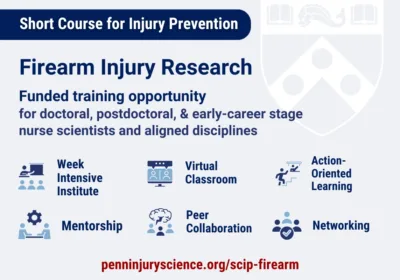
Funded Opportunity – Short Course on Firearm Injury Research
The University of Pennsylvania, in collaboration with Vanderbilt University, invite you to apply for the R25…